








Understanding British Type Scaffolding Couplers
British Type Scaffolding Coupler systems are designed according to BS 1139 and EN 74 standards, which govern the specifications for scaffolding equipment in construction industries. These couplers serve as critical connection points that join scaffolding tubes together, forming secure structures capable of supporting heavy loads and withstanding environmental stresses.
The British type coupler distinguishes itself from other international standards through its specific dimensional requirements, material specifications, and testing protocols. A genuine British Type Scaffolding Coupler must undergo rigorous drop testing, tensile strength evaluation, and slip resistance assessments to earn certification marks that demonstrate compliance with British safety regulations.
Understanding these foundational standards is essential because using non-compliant couplers can lead to catastrophic structural failures, legal liabilities, and project delays. When sourcing couplers for your scaffolding system, always verify that products carry the appropriate certification markings and have been tested by accredited laboratories.
Material Quality and Durability
The material composition of a British Type Scaffolding Coupler directly impacts its performance and service life. High-quality couplers are manufactured from ductile iron or forged steel, materials chosen for their exceptional strength-to-weight ratios and resistance to deformation under load. Drop-forged steel couplers represent the premium option, offering superior durability and consistent performance across temperature variations.
When evaluating material quality, examine the coupler's surface finish and coating. Hot-dip galvanization provides excellent corrosion resistance, making couplers suitable for outdoor use and harsh environmental conditions. The zinc coating acts as a sacrificial layer, protecting the underlying steel from rust and extending the component's lifespan significantly.
Avoid couplers with inferior coatings or those manufactured from low-grade materials, as these may fail prematurely and compromise scaffolding integrity. Always request material certification documents from suppliers to verify compliance with British standards.
Safety Standards and Certifications
Compliance with safety standards is non-negotiable when selecting a British Type Scaffolding Coupler. The two primary standards governing these components are BS 1139 and EN 74, which specify dimensional tolerances, mechanical properties, and testing procedures.
BS 1139 Part 2.2 focuses on couplers, detailing requirements for dimensional accuracy, strength, and durability. EN 74, on the other hand, provides specifications for couplers, spacers, and bases used in working scaffolds. A compliant coupler must display permanent markings indicating the manufacturer's identification, production date, and standard compliance.
When sourcing couplers, request test certificates and inspect physical samples before placing bulk orders. Reputable suppliers will readily provide documentation proving their products have passed required tests, including slip resistance, ultimate load capacity, and fatigue testing.
Load Capacity and Structural Integrity
The load-bearing capacity of a British Type Scaffolding Coupler determines its suitability for specific applications. Different coupler types exhibit varying load capacities depending on their design and intended use. For instance, right-angle couplers used in main load-bearing connections must withstand higher shear forces compared to swivel couplers used in bracing applications.
Understanding load distribution in scaffolding systems helps in selecting couplers with appropriate capacity ratings. Consult engineering calculations and scaffold design drawings to determine the required load specifications for each connection point. Over-specifying coupler capacity provides an additional safety margin, while under-specifying creates hazardous conditions.
Structural integrity also depends on proper installation and regular inspection. Even the highest-quality coupler will fail if improperly installed or damaged during handling. Train installation teams on correct assembly procedures and implement inspection protocols to identify worn or damaged components before they cause accidents.
Corrosion Resistance for Long-Term Performance
Construction sites expose scaffolding equipment to moisture, chemicals, and abrasive conditions that accelerate corrosion. Selecting a British Type Scaffolding Coupler with adequate corrosion protection ensures long-term performance and reduces replacement costs.
Hot-dip galvanizing remains the gold standard for corrosion protection in scaffolding components. This process creates a metallurgical bond between zinc and steel, resulting in a coating that provides both barrier and cathodic protection. Couplers with thick, uniform galvanization layers resist rust formation even when scratched or exposed to salty air.
For projects in extremely corrosive environments, consider couplers with additional protective treatments or those manufactured from stainless steel alloys. While more expensive initially, these options deliver superior longevity and maintain structural integrity in challenging conditions.
Common Types of British Type Scaffolding Couplers
Right-Angle Couplers
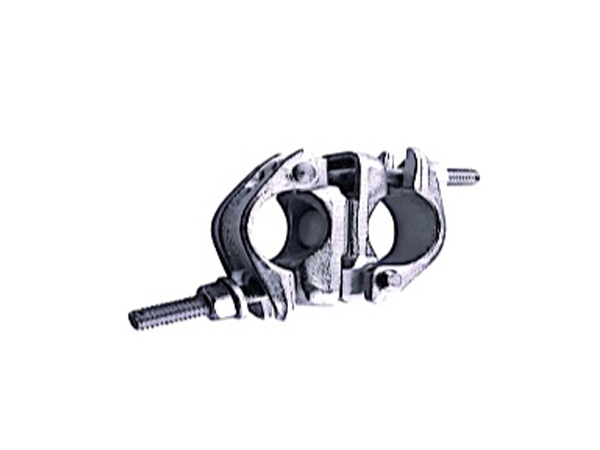
Right-angle couplers, also known as double couplers, connect two tubes at 90-degree angles and form the backbone of most scaffolding structures. A reliable British Type Scaffolding Coupler in right-angle configuration must maintain positive locking action and resist spontaneous loosening under vibration.
These couplers handle primary structural loads and require careful selection based on expected load magnitudes. Heavy-duty right-angle couplers feature reinforced bodies and high-tensile bolts to accommodate increased load demands in high-rise scaffolding or bridges.
Swivel Couplers
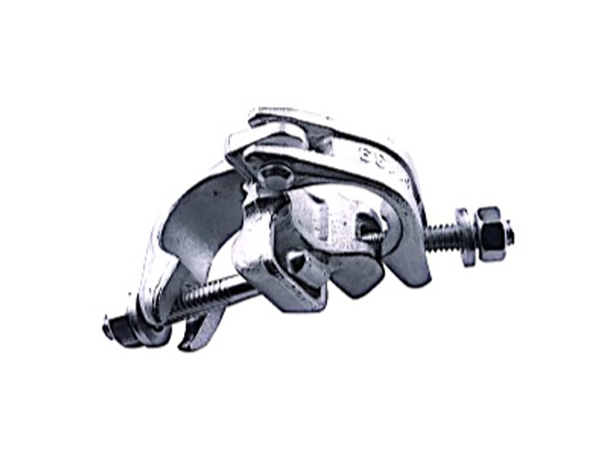
Swivel couplers provide angular flexibility, allowing connections at any angle between 0 and 180 degrees. This versatility makes them indispensable for creating diagonal bracing, connecting scaffolding to existing structures, and accommodating irregular geometries.
When choosing swivel couplers, prioritize smooth pivot action without excessive play. The swivel mechanism should move freely during installation but lock securely once tightened. Inferior swivel couplers may develop stiffness or looseness over time, compromising their effectiveness.
Sleeve Couplers
Sleeve couplers, or parallel couplers, join two tubes end-to-end to create longer spans. These couplers must provide full-strength connections that maintain tube alignment and load transfer efficiency. A properly designed British Type Scaffolding Coupler in sleeve configuration distributes stresses evenly across the joint, preventing stress concentrations that could lead to premature failure.
Sleeve couplers are particularly important when extending standards (vertical tubes) or ledgers (horizontal tubes) beyond standard tube lengths. Ensure that sleeve coupler selection considers both the mechanical properties of connected tubes and the loads they will carry.
Installation Best Practices
Proper installation of British Type Scaffolding Coupler systems requires trained personnel, appropriate tools, and adherence to established procedures. Begin by inspecting each coupler for damage, verifying that moving parts operate smoothly and that protective coatings remain intact.
Use correctly sized spanners or wrenches to achieve specified torque values when tightening coupler bolts. Under-tightening reduces load capacity and allows connections to loosen, while over-tightening can damage threads or deform coupler bodies. Follow manufacturer recommendations and industry guidelines for torque specifications.
During installation, position couplers to minimize exposure to impact and abrasion. Arrange scaffolding layouts to keep couplers away from areas where materials handling or equipment operation might cause accidental damage. Regular inspection during and after installation helps identify and correct installation errors before they create hazards.
Maintenance and Inspection Guidelines
Establishing a maintenance routine for British Type Scaffolding Coupler inventories protects your investment and ensures ongoing compliance with safety regulations. Develop inspection checklists that cover visual examination, functional testing, and dimensional verification.
Visually inspect couplers for signs of corrosion, cracks, deformation, or wear. Pay particular attention to high-stress areas such as bolt holes, pivot points, and load-bearing surfaces. Couplers showing any of these defects must be removed from service immediately and either repaired by qualified personnel or scrapped.
Functional testing involves operating moving parts to ensure they move freely through their full range of motion. Stiff or binding mechanisms indicate contamination, corrosion, or damage that requires attention. Clean and lubricate couplers according to manufacturer instructions, using compatible products that will not degrade protective coatings.
Making the Right Choice for Your Project
Selecting the optimal British Type Scaffolding Coupler requires balancing multiple factors including material quality, certification compliance, load capacity, corrosion resistance, and cost-effectiveness. By understanding these factors and following the guidelines outlined in this article, you can confidently choose couplers that deliver safety, performance, and value for your scaffolding projects.
Remember that the British Type Scaffolding Coupler you select becomes an integral part of a life-safety system. Prioritize quality and compliance over initial cost savings, and establish relationships with suppliers who demonstrate commitment to British standards and customer support. Your diligent selection process contributes directly to safer construction sites and more successful project outcomes.
References
British Standards Institution. (2019). BS 1139-2-2:2019 - Metal scaffolds - Part 2-2: Couplers - Requirements and test methods. BSI Standards Limited.
European Committee for Standardization. (2020). EN 74-1:2020 - Couplers, spigots and base plates for use in working scaffolds - Part 1: Couplers - Requirements and test methods. CEN-CENELEC Management Centre.
Health and Safety Executive. (2021). Safe use of scaffolds - Guidance for scaffolding contractors and employers. HSE Books.