








The steel body of a British Type scaffolding coupler is strong enough to carry structural loads safely—but bare steel left unprotected will rust within weeks of exposure to a construction site environment. Surface treatment is what transforms raw steel into a product that can withstand years of outdoor service, repeated handling, and exposure to moisture, chemicals, and physical abrasion.
For procurement teams sourcing British Type scaffolding coupler products, understanding the surface treatment options available from manufacturers is important for matching the product to the service environment while controlling cost.
Why Surface Treatment Matters for Scaffolding Couplers
A British Type scaffolding coupler left untreated will develop visible surface rust within days of exposure to outdoor air. Within months, the corrosion begins to affect function: the bolt threads become clogged with rust scale, the jaw surfaces roughen and lose their slip resistance, and the overall cross-section of the load-bearing steel reduces as the corrosion penetrates deeper. Advanced corrosion can reduce the effective load capacity of a British Type scaffolding coupler by 20% or more within a few years—a reduction that directly compromises the safety factor the product was designed to provide.
Surface treatment is not an aesthetic consideration. It is a functional requirement that preserves the mechanical properties of the British Type scaffolding coupler throughout its intended service life. A manufacturer that skimps on surface treatment is delivering a product that will degrade faster than specification allows.
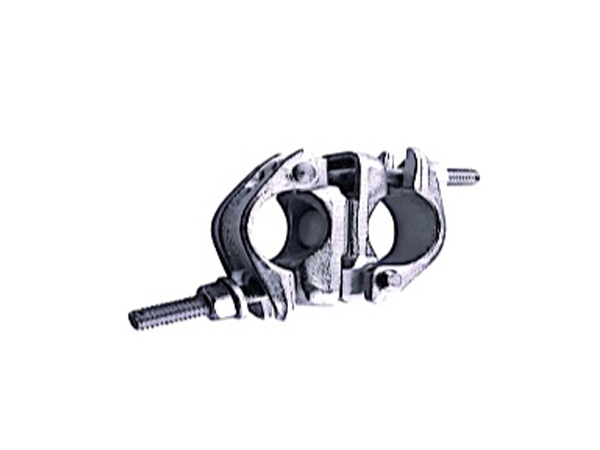
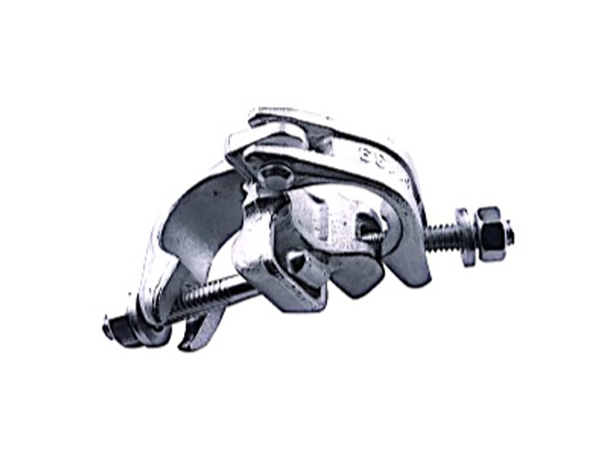
Hot-Dip Galvanization: The Industry Standard
Hot-dip galvanization is the most widely used surface treatment for British Type scaffolding coupler products from professional manufacturers. The process involves cleaning the steel components chemically, then immersing them in a bath of molten zinc at approximately 450°C. The zinc reacts with the steel surface to form a series of zinc-iron alloy layers topped with a pure zinc layer.
Key advantages for British Type scaffolding coupler products:
Service life: A galvanized British Type scaffolding coupler typically provides 15–25 years of corrosion protection in general atmospheric conditions before the zinc coating degrades to the point where the underlying steel begins to corrode.
Sacrificial protection: If the zinc coating is scratched through to the steel during handling or service, the surrounding zinc continues to protect the exposed steel electrochemically. No other coating system provides this self-healing behaviour.
Full coverage: The immersion process reaches inside cavities, threaded holes, and between overlapping components—areas that spray or brush-applied coatings cannot reach. This matters especially for the bolt threads and internal surfaces of a British Type scaffolding coupler.
The main limitation of hot-dip galvanization for British Type scaffolding coupler production is that the high temperature (450°C) can cause distortion in thin-walled sections. A skilled manufacturer accounts for this by designing the coupler with adequate section thickness and by slow-cooling the galvanized components.
Mechanical (Zinc) Plating
Mechanical plating is an alternative to hot-dip galvanization that applies a zinc coating at room temperature. The British Type scaffolding coupler components are tumbled in a drum with zinc powder, glass beads, and chemical promoters. The glass beads peen the zinc powder onto the steel surface, building up a coating layer by layer.
Advantages of mechanical plating for British Type scaffolding coupler products:
No hydrogen embrittlement risk: Because the process operates at room temperature, there is no hydrogen embrittlement effect on high-strength fasteners. This matters for the grade 8.8 or 10.9 bolts used in heavy-duty British Type scaffolding coupler assembly.
Uniform coating on threaded surfaces: The mechanical action distributes zinc evenly over threads without bridging or clogging them—a common issue with hot-dip galvanization.
No distortion: The room-temperature process does not cause the thermal distortion that can affect thin-walled coupler components during hot-dip galvanizing.
The trade-off is that mechanical plating produces a thinner coating than hot-dip galvanization—typically 8–20 µm compared to 55–85 µm for hot-dip. This means lower corrosion resistance in aggressive environments. For general construction use, mechanical plating provides adequate protection, but for marine, coastal, or chemical environments, hot-dip galvanized British Type scaffolding coupler products are preferred.
Duplex Coating: Galvanization Plus Paint
For the most demanding environments, some suppliers offer a duplex coating system: the British Type scaffolding coupler is hot-dip galvanized first, then an additional paint or powder coating layer is applied over the zinc. The two layers work together to provide corrosion protection far exceeding either system alone.
The performance of the duplex system follows a rule of thumb: the service life of a duplex-coated product is approximately 1.5 to 2.5 times the sum of the individual coating lives. If the galvanized layer alone would provide 20 years and the paint layer alone would provide 5 years, the duplex system can be expected to provide 30–50 years.
Duplex-coated British Type scaffolding coupler products are typically specified for:
Offshore platforms and marine terminals
Chemical processing plants with aggressive atmospheres
Infrastructure projects with 50+ year design lives
Projects where colour coding of scaffold components is required for inventory management
Paint and Powder Coating
Paint and powder coating are the simplest and lowest-cost surface treatments available from British Type scaffolding coupler manufacturers. Paint is applied by spray or brush; powder coating is applied electrostatically and cured in an oven.
While painted British Type scaffolding coupler products are cheaper upfront, they offer the shortest service life of any treatment option. Paint chips at edges and abrasion points, exposing bare steel. Once the coating is breached, corrosion propagates beneath the paint layer, eventually causing the paint to flake off in large patches.
For short-duration projects, rental inventory, or indoor scaffolding use, painted British Type scaffolding coupler products from a reputable manufacturer may be acceptable. For long-term outdoor service, galvanized or duplex-coated products provide much better value despite the higher initial cost.
Factory Quality Checks for Surface Treatment
When sourcing British Type scaffolding coupler products, procurement teams should verify the following quality indicators related to surface treatment:
Coating thickness: For hot-dip galvanized products, request the coating thickness measurement report from the supplier. The minimum acceptable thickness is 55 µm per ISO 1461 for the steel section thickness used in most coupler bodies.
Adhesion test: A cross-cut tape test (ISO 2409) confirms that the paint or powder coating adheres properly to the substrate. Poor adhesion leads to premature coating failure.
Thread protection: Verify that the bolt threads of the British Type scaffolding coupler are functional and not clogged with excess coating. This is a common problem with hot-dip galvanized couplers from less experienced manufacturers.
Uniform appearance: While appearance is secondary to performance, a uniform coating finish across all components of a batch indicates good process control at the factory.
FAQ: Scaffolding Coupler Surface Treatment
What is the best surface treatment for British Type couplers used in coastal areas?
For coastal or marine environments, hot-dip galvanization is the minimum recommended treatment for British Type scaffolding coupler products. For installations within 1 km of the coastline or in offshore applications, duplex coating (galvanization plus an additional paint/powder layer) provides significantly better protection against chloride-induced corrosion.
Can galvanized couplers be welded after treatment?
Welding a galvanized British Type scaffolding coupler after manufacture is not recommended. The welding arc vaporizes the zinc coating in the weld zone, creating zinc oxide fumes that are hazardous to inhale. The heat-affected zone also suffers localised corrosion protection loss. If modifications are required, specify uncoated couplers for welding and arrange for post-weld galvanization of the modified assembly.
How often should coupler surface treatments be inspected and maintained?
For hot-dip galvanized British Type scaffolding coupler products in standard construction environments, annual inspection is adequate. Coating damage (scratches, chips, localised rust) should be repaired promptly with zinc-rich paint. In corrosive environments or after exposure to aggressive chemicals, inspect the British Type scaffolding coupler coating condition every 6 months and repair or replace units with advanced coating degradation.
Conclusion
Surface treatment is a critical specification parameter for British Type scaffolding coupler products that directly affects service life, maintenance requirements, and long-term cost. Hot-dip galvanization remains the industry standard for professional construction use, providing reliable corrosion protection over decades of service. Mechanical plating offers a practical alternative for applications where thread preservation and hydrogen embrittlement avoidance are priorities. Duplex coating systems provide enhanced protection for the most demanding environments. When sourcing from a manufacturer, procurement teams should verify coating thickness, adhesion, and thread condition—and select the treatment that matches both the service environment and the project budget.
References
International Organization for Standardization. ISO 1461:2019 Hot Dip Galvanized Coatings on Iron and Steel Articles. ISO.
British Standards Institution. BS EN 74-1:2021 Scaffolding Fittings—Performance Requirements and Test Methods. BSI.
American Society for Testing and Materials. ASTM A123: Standard Specification for Zinc (Hot-Dip Galvanized) Coatings on Iron and Steel Products. ASTM.
International Organization for Standardization. ISO 2409:2013 Paints and Varnishes—Cross-Cut Test. ISO.
Porter, F.C. Zinc Handbook: Properties, Processing, and Use in Design. 2nd Edition. CRC Press.