








For procurement managers and equipment specifiers sourcing Steel Plank for scaffolding systems, the choice between bare, painted, and galvanized stock is a multi-year cost and safety decision. A Hot Dip Galvanized Steel Plank carries a higher upfront price, but that premium is recovered through durability, reduced handling, and near-zero site maintenance. This article explains the mechanism, the field data, and the procurement logic.
Why Galvanization Matters for Scaffold Planks
A scaffold plank works in the harshest construction conditions: rain, dew, abrasive grit, repeated loading, and constant movement between sites. Bare steel oxidizes almost immediately, and once corrosion establishes, structural integrity and slip resistance both decline. Specifying a Hot Dip Galvanized Steel Plank is the most reliable way for a manufacturer to deliver product that arrives ready to work and stays workable for years. For a buyer, galvanization is the difference between an asset and a liability.
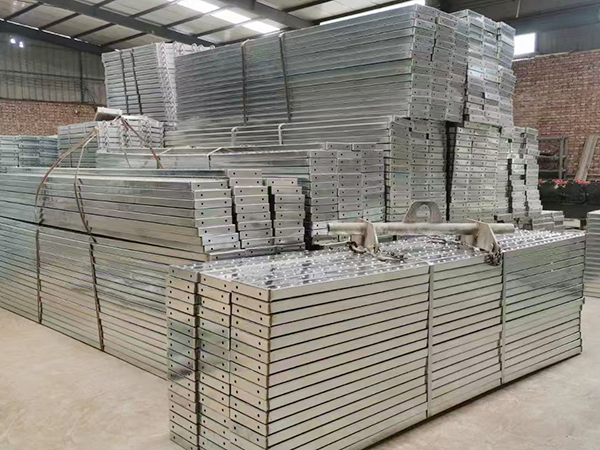
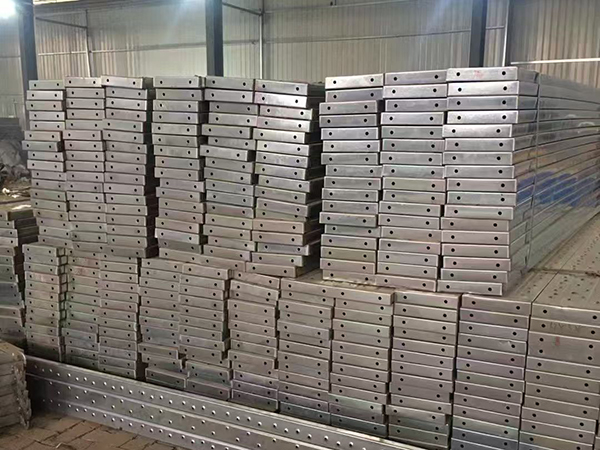
How Hot Dip Galvanization Protects Steel
Hot dip galvanizing is a metallurgical process, not a surface coating. After fabrication and surface preparation, the Steel Plank is immersed in molten zinc at roughly 450 degrees Celsius. The zinc reacts with the iron to form bonded zinc-iron alloy layers capped by pure zinc, which is what sets galvanizing apart from paint.
Protection works two ways. First, it is a barrier sealing steel from moisture and oxygen. Second, it provides sacrificial protection: zinc is more electrochemically active than steel, so if the coating is scratched deep enough to expose metal, surrounding zinc corrodes preferentially and shields the edge. This is why a Hot Dip Galvanized Steel Plank survives site abuse that would quickly compromise a painted finish, where any break becomes a corrosion initiation point.
Service Life Advantages Across Environments
In rural atmospheres with low pollution, a standard galvanized coating on a Steel Plank delivers 20 to 25 years before first maintenance. In industrial and urban atmospheres with higher sulfur and particulate loads, expect 15 to 20 years. In coastal and marine environments where chlorides accelerate attack, that falls to roughly 10 to 15 years, though thicker specified coatings extend this materially.
The procurement point is predictability. With bare or painted steel, degradation is irregular and inspection-driven. With galvanizing, coating thickness can be specified, measured, and guaranteed by the supplier, giving the buyer a defensible service-life estimate for budgeting.
What Happens Without Galvanization
Unprotected mild steel in an industrial atmosphere corrodes at 0.05 to 0.15 millimeters per year, rising toward 0.2 millimeters or more in aggressive coastal conditions. A plank that loses a fraction of a millimeter of wall thickness loses disproportionately more load capacity, because corrosion attacks edges and corners where stress concentrates.
Painted Steel Plank delays this but does not stop it. Once paint is breached, the corrosion rate underneath often exceeds the bare-steel rate through crevice and under-film attack. A Hot Dip Galvanized Steel Plank removes this failure mode for the bulk of its service life.
Maintenance-Free Performance Benefits
The operational advantage of galvanized stock is measured in labor hours avoided. Painted planks must be inspected, blasted, and repainted on a single-digit-year cycle, each requiring off-site handling, surface prep, and recoat downtime. Galvanized planks need only periodic visual inspection.
For a contractor running hundreds of planks across rotating sites, this means fewer yard trips, less manual handling risk, and a cleaner equipment certification trail. The supply chain also benefits: a galvanized finish tolerates stacking, transport, and rain storage without the film being destroyed in transit.
Lifecycle Cost Comparison
Over a 20-year horizon, the economics are decisive. The galvanized plank costs 15 to 30 percent more at purchase. But when repaint cycles, their labor, lost utilization, and premature bare-steel scrap are factored in, the Hot Dip Galvanized Steel Plank delivers the lowest total cost of ownership. A manufacturer supplying galvanized product effectively returns deferred maintenance budget to the buyer.
What to Specify When Ordering from a Supplier
When issuing a purchase order, specify the coating standard and minimum average thickness rather than simply requesting "galvanized." Ask the factory for compliance with recognized galvanizing standards, a certificate of coating weight, and confirmation that fabrication is completed before galvanizing so there are no unprotected cut edges. Clarify whether the Steel Plank is supplied pre-inspected for flatness and slip resistance, and confirm rain-safe transit packaging. A capable supplier provides coating thickness documentation with the shipment.
FAQ
Does galvanizing affect the load rating?
No. The process adds a thin metallurgical coating without reducing the steel section; load ratings depend on base steel and geometry, both unchanged.
Can a damaged galvanized plank be repaired on site?
Minor scratches need no action due to sacrificial protection. For deep cuts, cold-galvanizing compound restores protection, rarely needed within normal service life.
Is galvanized steel suitable for coastal projects?
Yes, with a thicker specified coating. Discuss the corrosion category with your supplier so thickness matches the environment.
Why pay more over painted?
Because the coating is metallurgically bonded and self-protecting, eliminating the recurring repaint cycles that dominate painted-stock lifecycle cost.
Conclusion
Specifying a Hot Dip Galvanized Steel Plank is a procurement decision that pays for itself across the asset's life. The metallurgical bond, sacrificial protection, and predictable service life remove the largest cost drivers in scaffolding equipment: corrosion, inspection, and refurbishment. For volume buyers, working with a manufacturer that documents coating thickness and supplies to standard is the most reliable path to low total cost of ownership.
References
1. ASTM International. "Standard Specification for Zinc Coating (Hot-Dip) on Iron and Steel Products." ASTM A123/A123M.
2. American Galvanizers Association. "Life Expectancy of Hot-Dip Galvanized Steel." Technical Bulletin, Corrosion Category Field Data.
3. ISO. "Zinc Coatings - General Principles of Design and Corrosion Resistance." ISO 14713 Series.
4. European General Galvanizers Association. "Durability and Service Life of Galvanized Steel in Atmospheric Environments."