








When you are procuring Steel Plank components for an industrial scaffolding project, the difference between a safe, efficient scaffold and a liability often comes down to a handful of material and design choices. Whether you are supervising a petrochemical plant turnaround, a shipyard maintenance shutdown, or a new-build construction site, the Steel Plank you select must perform under real-world loads, weather, and worker traffic — not just in a catalog photo.
This guide walks site engineers and scaffolding supervisors through the key selection criteria for the best Steel Plank for industrial scaffolding, so you can spec with confidence and avoid costly reorders or safety incidents.
Why Steel Plank Quality Matters in Industrial Scaffolding
Industrial scaffolding platforms face conditions that are far more demanding than light commercial applications. Workers carry tools, equipment, and materials across planks. Forklifts and hoists may transfer loads onto platform levels. Vibration, impact, and repeated loading cycles are the norm.
A Steel Plank that is underspecified for these conditions will deflect, crack, or corrode prematurely. That is not just a maintenance problem — it is a safety and compliance problem. The consequences of plank failure include worker injury, project delays, regulatory penalties, and reputational damage. Specifying the right Steel Plank from the outset is far less expensive than rectifying a failure mid-project.
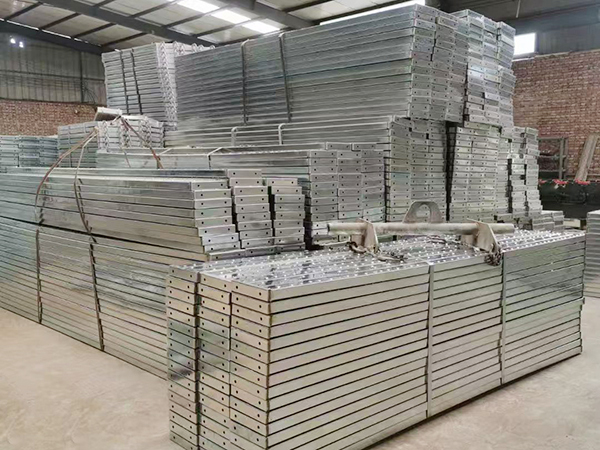
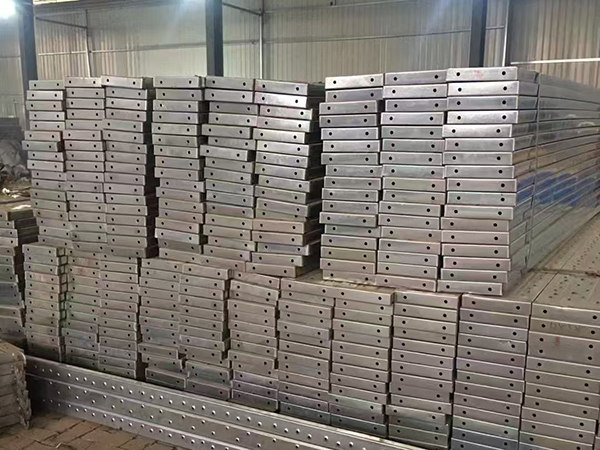
Anti-Slip Surface Design and Worker Safety
The primary safety function of a Steel Plank is to provide a stable, slip-resistant walking surface underfoot. In industrial environments, surfaces are frequently wet, oily, or contaminated with fine particulates. A smooth steel platform becomes a hazard under these conditions.
The best industrial Steel Plank products feature a raised anti-slip pattern — typically a serrated, diamond-grip, or perforated design — that channels liquid and debris away from the sole of the worker's boot. This pattern is not decorative; it is a functional safety feature that measurably reduces slip incidents on scaffold platforms.
When evaluating anti-slip performance, consider the pattern depth and distribution across the full plank surface, including the edges. Partial patterns that leave the plank perimeter unprotected create a false sense of security. Look for planks where the anti-slip texture extends from edge to edge.
Steel Gauge and Its Effect on Load Capacity
Steel gauge — the thickness of the steel sheet or profile — is the single most direct determinant of a Steel Plank's load capacity and stiffness. Thinner gauge steel will deflect under load, creating a springy, uncomfortable walking surface that accelerates fatigue and increases the risk of structural fatigue failure over repeated use cycles.
For industrial scaffolding applications, a Steel Plank should be manufactured from steel with a gauge of at least 1.5 mm (approximately 16 gauge) for the plank body, with reinforced end caps and intermediate support ribs where applicable. Heavier industrial-duty planks may use 2.0 mm or thicker steel in the walking surface and structural rib zones.
Load capacity specifications should be verified against the intended platform configuration, including support spacing. A plank may carry a 300 kg point load in a laboratory test but perform poorly at a 1.2-meter span with a uniformly distributed load. Always cross-reference the manufacturer's load tables with your actual scaffold bay dimensions.
Hot Dip Galvanization for Industrial Durability
Corrosion is the enemy of steel in any outdoor or humid industrial environment. A Steel Plank that is not adequately protected will surface-rust within weeks of exposure, compromising both its structural integrity and its slip-resistant surface pattern.
Hot dip galvanization (HDG) is the industry-standard corrosion protection for industrial Steel Plank components. In this process, the fabricated steel plank is immersed in a bath of molten zinc at approximately 450 °C, metallurgically bonding a zinc coating to the steel surface. The result is a coating that is both cathodically protective — meaning it will continue to shield the steel even if the surface is scratched — and abrasion-resistant.
For outdoor scaffolding, coastal installations, or environments with high humidity or chemical exposure, hot dip galvanization is not optional — it is a baseline requirement. The zinc coating thickness, typically expressed in grams per square meter (g/m²), should be specified to meet or exceed the relevant standard requirements for your jurisdiction.
Compatibility with Tube and Fitting Scaffolding Systems
Industrial scaffolding is often built using a tube and fitting (also called tube and clamp) system, where individual steel tubes are connected by cast or forged fittings rather than locked into a modular frame. This system offers flexibility in complex geometries but places specific demands on Steel Plank components.
The best Steel Plank for tube and fitting scaffolding should feature standard hook or collar connections that engage reliably with standard scaffold tube diameters (typically 48.3 mm OD). Plank hook geometry must be compatible with the most common ledger tube sizes and fitting profiles used in your region. Inconsistency in hook engagement is a common cause of plank displacement and platform instability.
Plank width is another compatibility consideration. Standard platform widths for industrial tube and fitting scaffolding typically range from 600 mm to 900 mm. Confirm that the Steel Plank width you select aligns with your scaffold bay dimensions to avoid bridging gaps or overhangs that create trip hazards.
Environment-Specific Selection: Indoor, Outdoor, and Coastal
Not all industrial environments are equivalent. A Steel Plank that performs well in a dry indoor fabrication shop may fail rapidly in a humid coastal refinery or an outdoor construction site subject to freeze-thaw cycles.
Indoor industrial environments — where humidity and chemical exposure are controlled — may allow for electro-galvanized or painted Steel Plank options as a cost-saving measure, provided load and anti-slip requirements are still met.
Outdoor industrial environments — construction sites, refineries, power plants — require hot dip galvanization as the minimum corrosion protection standard.
Coastal and marine environments — shipyards, offshore platforms, ports — demand heavy hot dip galvanization (typically 350–600 g/m² zinc coating) and may benefit from additional powder coating or paint overgalvanization systems to withstand chloride-rich atmospheric conditions.
Specification Checklist for B2B Procurement
Before issuing a purchase order for Steel Plank components, confirm the following specifications with your supplier:
Steel gauge and minimum yield strength
Hot dip galvanization coating weight (g/m²) and compliance standard
Anti-slip pattern type and coverage area
Rated uniform distributed load (UDL) and point load at specified span
Plank width and hook/collar geometry compatible with your scaffold system
End cap design and reinforcement details
Third-party testing or certification (e.g., BS EN 12811, OSHA, or equivalent regional standard)
Minimum order quantity, lead time, and packaging for site delivery
Frequently Asked Questions
What is the standard thickness of industrial Steel Plank?
Industrial-duty Steel Plank typically uses steel in the range of 1.5 mm to 2.0 mm gauge (approximately 16–14 gauge). The specific requirement depends on the platform span and the anticipated uniform distributed load. Heavier gauge provides greater stiffness and load capacity but also adds weight.
How does hot dip galvanization extend Steel Plank service life?
Hot dip galvanization applies a metallurgically bonded zinc coating that provides both barrier protection and cathodic (sacrificial) protection to the underlying steel. Even if the surface is scratched or damaged, the zinc coating continues to protect the exposed steel by corroding preferentially. A properly galvanized Steel Plank in a typical outdoor industrial environment can remain serviceable for 15–25 years without major maintenance.
Can Steel Plank be used with Cuplock or Ring Lock system scaffolding?
Standard Steel Plank with hook-type connections is primarily designed for tube and fitting scaffolding. Cuplock and Ring Lock systems use proprietary ledger-head connections that require planks with matching hook or clevis fittings. Always verify compatibility with the specific scaffold system manufacturer before procurement.
What load capacity should I specify for a general industrial working platform?
A minimum working platform should support a uniform distributed load of 200–250 kg/m², which accommodates typical worker foot traffic, hand tools, and small material handling. For platforms that will support equipment or material stacking, specify planks rated for 450–600 kg/m² UDL and verify point load ratings accordingly.
Conclusion
Selecting the best Steel Plank for industrial scaffolding is not a commodity purchase — it is a specification-driven engineering decision that directly affects site safety, productivity, and long-term cost of ownership. Prioritize hot dip galvanization for corrosion resistance, confirm steel gauge against your load and span requirements, and verify that anti-slip surface design covers the full plank perimeter. Before finalizing procurement, cross-check hook geometry and plank width against your existing tube and fitting scaffolding system to ensure seamless field compatibility.
For specifications, technical data sheets, and project-specific pricing on industrial Steel Plank components, browse our product catalog or contact our technical sales team directly.
References
BS EN 12811-1:2003 — Temporary Works Equipment. Scaffolds. Performance Requirements and General Design. British Standards Institution.
OSHA 29 CFR 1926.451 — General Requirements for Scaffolding. Occupational Safety and Health Administration, United States Department of Labor.
AS/NZS 1576.1:2019 — Scaffolding — General Requirements. Standards Australia / Standards New Zealand.
ASTM A123/A123M — Standard Specification for Zinc (Hot-Dip Galvanized) Coatings on Iron and Steel Products. ASTM International.
ISO 1461:2009 — Hot Dip Galvanized Coatings on Fabricated Iron and Steel Articles — Specifications and Test Methods. International Organization for Standardization.