








The material from which a beam clamp is manufactured determines its load capacity, corrosion resistance, weight, cost, and suitability for specific environments. Selecting the correct material is not a secondary consideration—it is a fundamental specification decision that directly affects safety, durability, and total cost of ownership.
This guide examines the four primary materials used in beam clamp manufacturing—malleable iron, forged steel, cast steel, and stainless steel—comparing their mechanical properties, application suitability, and practical advantages for construction, industrial, and marine environments.
Understanding Material Properties in Beam Clamp Performance
Three mechanical properties define a beam clamp material's suitability for structural applications:
Yield strength: The stress at which permanent (plastic) deformation begins. Higher yield strength enables smaller cross-sections to carry the same load—reducing weight and cost.
Impact resistance: The ability to absorb sudden shock loads without fracturing. Impact resistance is critical in applications involving dynamic forces, hammer blows, or crane surge.
Fatigue endurance: The ability to withstand repeated loading cycles without cracking. Scaffolding and suspended services applications typically involve cyclic loading that demands good fatigue performance.
Malleable Iron Beam Clamps
Malleable iron is the most widely used material for general-purpose beam clamp products. It is produced by heat-treating white iron (fast-cooled molten iron) to decompose carbides into graphite nodules, creating a material with useful strength and ductility.
Advantages of malleable iron beam clamps:
Cost-effective: Malleable iron beam clamp units are 30–50% cheaper than equivalent forged steel versions. For applications within the material's load rating range, this represents excellent value.
Good castability: Complex clamp geometries can be produced in a single casting, reducing manufacturing cost and eliminating assembly joints that could be points of weakness.
Adequate strength: With yield strength of 175–250 MPa, malleable iron covers the majority of standard beam clamp applications up to 1,500 kg SWL.
Good vibration damping: Malleable iron absorbs vibration better than steel, reducing resonance issues in suspended service applications.
Limitations: Malleable iron is brittle compared to steel—it does not deform significantly before fracturing. Impact loads can cause sudden fracture without warning. For this reason, malleable iron beam clamp products are not recommended for applications involving significant dynamic or shock loading.
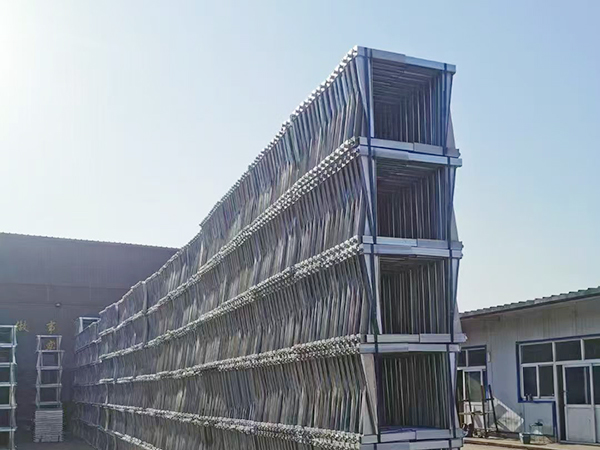
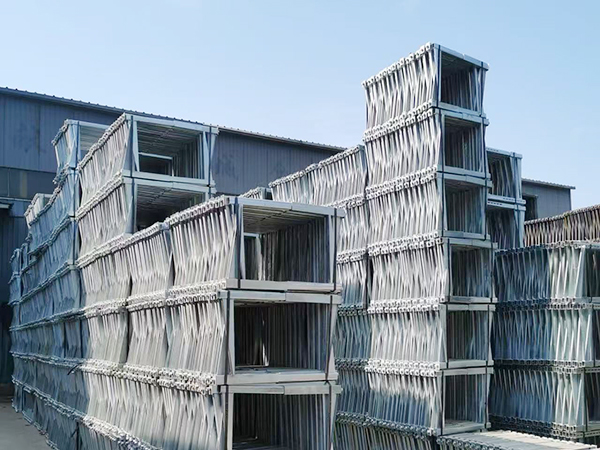
Forged Steel Beam Clamps
Drop forging is the premium manufacturing process for beam clamp products. Heated steel is shaped under high pressure in a two-part die, producing components with superior mechanical properties and consistent quality.
Advantages of forged steel beam clamps:
Superior mechanical properties: Forging refines the steel's grain structure along stress paths, producing yield strengths of 355–450 MPa—significantly exceeding malleable iron.
High impact resistance: Unlike brittle malleable iron, forged steel absorbs impact without fracturing. This is critical for applications involving hammer blows during installation or dynamic loads during service.
Fatigue performance: Forged beam clamp products exhibit superior fatigue endurance under cyclic loading—essential for applications in crane runways, vibrating equipment supports, and scaffolding.
Higher load ratings: Forged steel enables SWL ratings of 2,000–10,000 kg in the same physical size as a 1,500 kg malleable iron clamp.
For structural-critical applications, heavy lifting, or any scenario involving dynamic loading, the forged steel beam clamp is the clear material choice.
Stainless Steel Beam Clamps (Grade 316)
Stainless steel beam clamp products use austenitic Grade 316 (UNS S31600) as the standard specification for corrosive environments. Grade 316 contains 2–3% molybdenum, which significantly enhances chloride corrosion resistance compared to Grade 304.
Advantages of stainless steel beam clamps:
Corrosion resistance: Grade 316 stainless steel provides resistance to atmospheric corrosion, freshwater, and dilute acids. It is the standard specification for offshore platforms, coastal installations, chemical plants, and food processing facilities.
Clean appearance: For architecturally exposed structural steel or food-processing environments, the bright finish of stainless steel is preferable to galvanized or painted alternatives.
Temperature resistance: Stainless steel maintains its mechanical properties across a wider temperature range than carbon steel—from cryogenic temperatures to approximately 800°C before significant strength loss.
Hygienic properties: The smooth, non-porous surface of stainless steel does not harbor bacteria and is easily cleaned and sanitized—critical in food, beverage, and pharmaceutical facilities.
Important limitation: Grade 316 stainless steel has approximately 70% of the yield strength of equivalent S355 carbon steel. A stainless steel beam clamp of the same dimensions as a forged steel version will have a lower SWL. For high-load applications in corrosive environments, specify a larger stainless steel beam clamp rather than accepting a reduced load rating.
Hot-Dip Galvanized Carbon Steel Beam Clamps
Hot-dip galvanization is a surface treatment, not a base material—but its effect on beam clamp performance is so significant that it warrants dedicated analysis. Carbon steel clamps with hot-dip galvanization to ISO 1461 (65+ µm zinc coating) provide a practical combination of high strength and atmospheric corrosion resistance.
Advantages of galvanized beam clamps:
Strength of steel with corrosion protection: The base material retains full S235 or S355 carbon steel strength while the zinc coating provides sacrificial corrosion protection.
Cost-effective durability: Galvanized beam clamp products cost 20–40% more than plain steel equivalents but provide 15–25 years of outdoor service life without maintenance—significantly reducing lifecycle cost.
Sacrificial protection: Even if the zinc coating is scratched to bare steel, the surrounding zinc continues to protect the steel electrochemically. This self-healing property is unique to galvanization.
FAQ: Beam Clamp Materials
What is the strongest material for beam clamps?
Forged steel provides the highest strength-to-weight ratio among beam clamp materials, with yield strength of 355–450 MPa compared to 175–250 MPa for malleable iron. For the highest load ratings (2,000–10,000 kg SWL), forged steel is the only suitable material. However, for corrosive environments, the trade-off between strength and corrosion resistance must be evaluated.
Are malleable iron beam clamps safe for heavy applications?
Malleable iron beam clamp products are safe for applications within their rated SWL (typically 500–1,500 kg). However, they are not suitable for applications involving impact loading, significant vibration, or loads exceeding their rating. The brittleness of malleable iron means that overload can cause sudden fracture without prior visible warning signs.
When should stainless steel beam clamps be specified?
Specify stainless steel beam clamp products when the application involves: offshore or marine environments with saltwater exposure; chemical processing with acidic or alkaline conditions; food and pharmaceutical facilities requiring hygiene compliance; or architectural applications where appearance is a concern. Always verify the SWL rating at the required size—stainless steel has lower yield strength than carbon steel.
Does hot-dip galvanization affect beam clamp strength?
No. Hot-dip galvanization is a surface treatment applied after the clamp body has been manufactured and heat-treated. It does not alter the base metal's mechanical properties. The zinc coating adds approximately 30–100 µm to the surface dimensions and provides sacrificial corrosion protection without compromising structural strength.
Conclusion
Material selection for beam clamp products is a decision that balances cost, strength, corrosion resistance, and application requirements. Malleable iron provides cost-effective performance for standard applications within its rating. Forged steel delivers superior strength and impact resistance for heavy and dynamic applications. Stainless steel 316 is the definitive choice for corrosive and hygiene-critical environments. Hot-dip galvanized finishes extend service life across all carbon and forged steel variants.
For procurement teams, the key principle is: specify the material that matches the actual service environment and loading conditions. Over-specifying adds unnecessary cost; under-specifying creates safety risk. When in doubt, consult the clamp manufacturer or a structural engineer for application-specific guidance.
References
British Standards Institution. (2020). BS EN 13155:2020 Cranes—Non-Loaded Lifting Attachments. BSI.
Callister, W.D., & Rethwisch, D.G. (2020). Materials Science and Engineering: An Introduction. 10th Edition. Wiley.
International Organization for Standardization. (2019). ISO 1461:2019 Hot Dip Galvanized Coatings on Iron and Steel Articles. ISO.
Schulz, W., & Kloeckner, S. (2021). "Material Properties and Fatigue Performance of Malleable Iron vs Forged Steel in Mechanical Fasteners." Journal of Materials Engineering and Performance, 30(4), 2847–2859.
American Society of Mechanical Engineers. (2019). ASME B30.20—Below-the-Hook Lifting Devices. ASME.